
Pharmaceutical Purified Water Systems
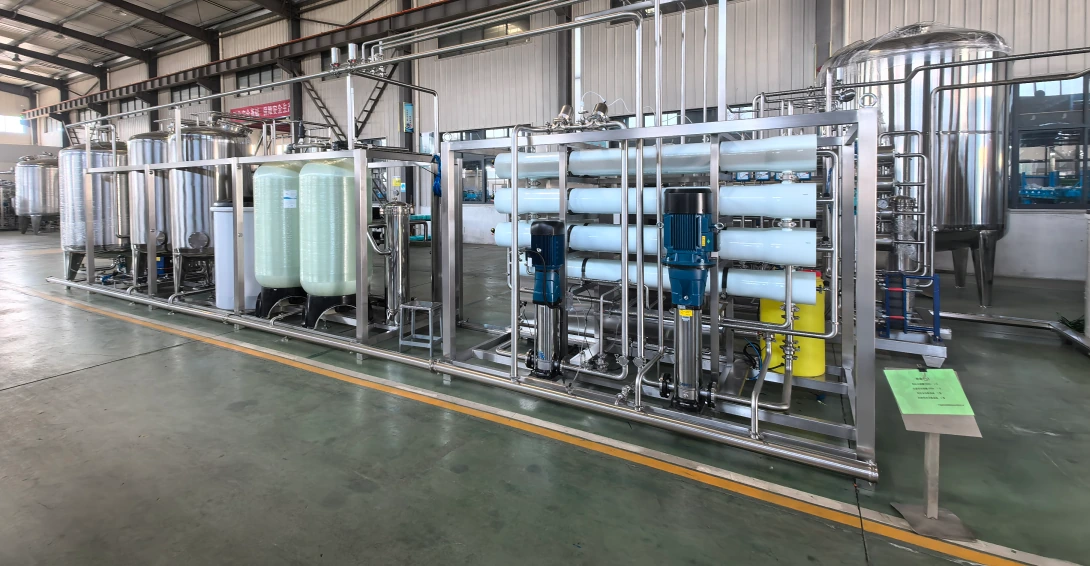
NINGRUI supplies pharmaceutical purified water preparation systems with pretreatment, reverse osmosis (RO), and electrodeionization (EDI) options. The treatment train is selected against the feed-water analysis, required water quality, and production demand.
Treatment Stages Matched to the Feed Water
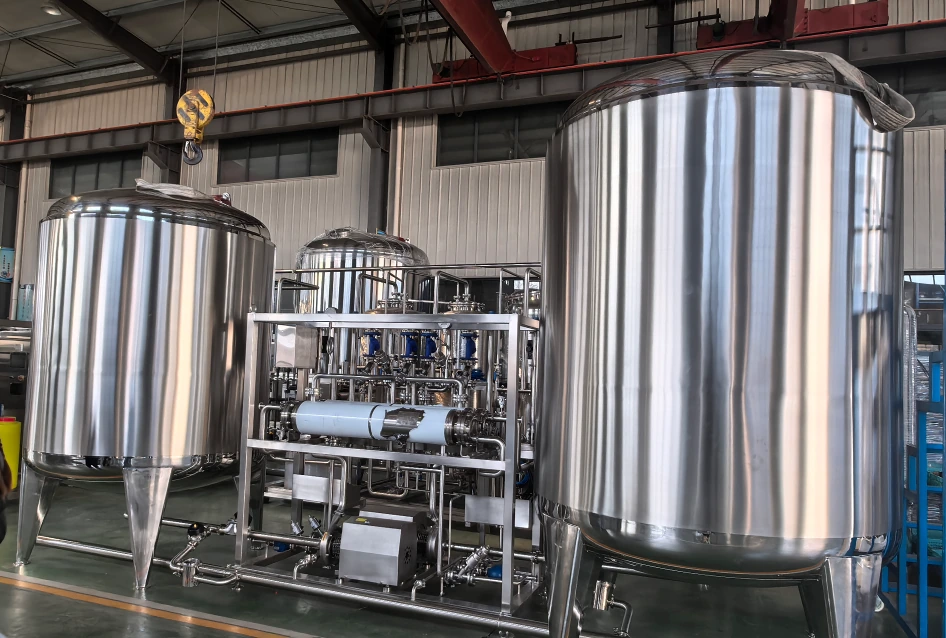
Illustrative treatment option; the final configuration depends on the feed-water analysis.
Sanitization and MonitoringPretreatment
Pretreatment addresses incoming contaminants before the main purification stages. Options include multimedia filtration, activated carbon filtration, softening, and cartridge filtration. The required combination depends on suspended solids, residual disinfectants, hardness, and other feed-water characteristics.
RO and EDI
A treatment train can use two-pass RO followed by EDI. RO reduces contaminants through membrane separation; EDI provides further removal of residual ions. The number of treatment stages and the selected components need to match the feed water and the target specification.
Sanitization and Monitoring
Sanitization needs to be considered when selecting the treatment equipment and its materials. UV treatment is an option within the water treatment process; it forms part of a wider microbial control strategy.
Conductivity and total organic carbon (TOC) address chemical quality. Microbiological monitoring and an appropriate sanitization program are also needed to assess and control the water system.
Technical Specification Basis
The following items define the project specification. Final equipment ratings, materials, and acceptance criteria are established for the selected configuration.
| Specification Item | Basis for Selection |
|---|---|
| Water Duty and Configuration | |
| Water duty | Pharmaceutical purified water preparation; define the intended uses and target water specification |
| Treatment configuration | Pretreatment and RO/EDI options, selected against the feed-water analysis |
| Production capacity | State the required rate in L/h, daily consumption, peak demand, and operating hours |
| Feed conditions | Supply the available water analysis, pressure, temperature range, and seasonal variation where known |
| Materials, Monitoring and Sanitization | |
| Contact materials and finish | Specify the requirements for each treatment stage and compatibility with the sanitization method |
| Monitoring and controls | Define the conductivity, TOC, process measurement, alarm, and data-recording requirements |
| Sanitization | Define the method, affected components, operating conditions, and verification requirements |
| Site, Utilities and Documentation | |
| Site and utility interfaces | Identify floor space, drainage, electrical supply, and connections to storage and distribution |
| Documentation and testing | Agree the drawings, component records, acceptance tests, and qualification support required for the project |
Applications for Purified Water
Purified water is used in pharmaceutical processing, non-sterile formulation, and cleaning where PW is the specified grade. The required grade and acceptance criteria follow the product, process, and intended use.
Where the process requires WFI, review the water for injection system scope separately.
Plan the Storage and Distribution Interface
The generation unit supplies a downstream water system. Storage capacity, circulation, points of use, and sanitization need to be coordinated with the generation duty.
See water storage and distribution systems for this part of the equipment package, or return to pharmaceutical water systems to compare the system roles.
Send Your Purified Water Design Basis
Include the feed-water analysis, target specification, required production rate, and operating schedule. Add the site layout, available utilities, and preferred sanitization and documentation requirements if they are already defined. Use the purified water system quote checklist to organize the supporting information for your inquiry.